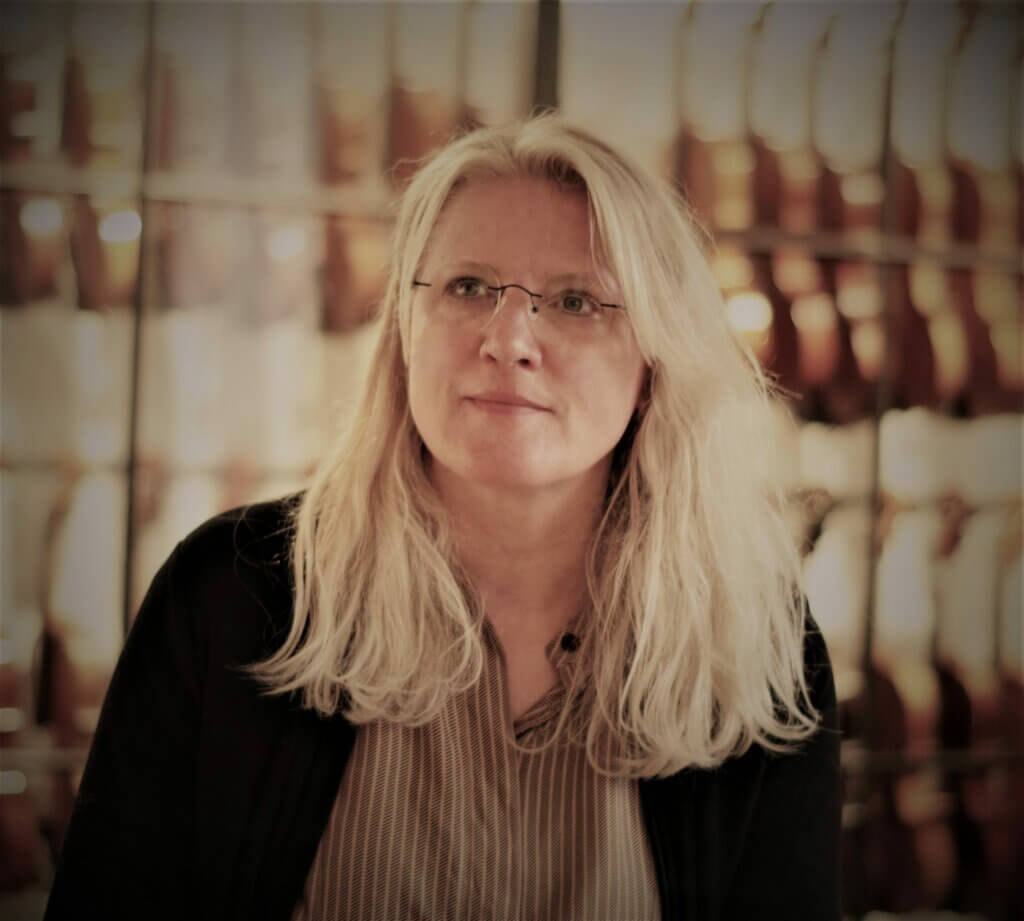
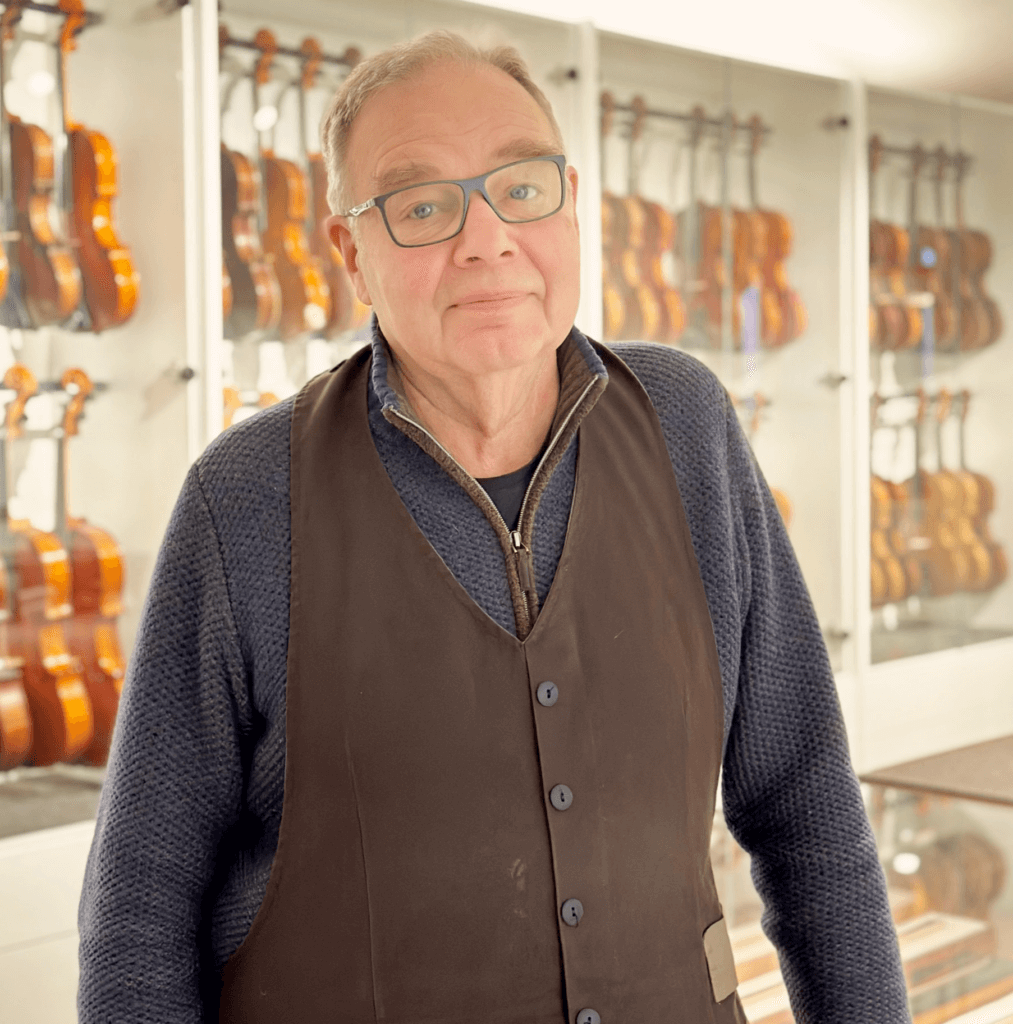
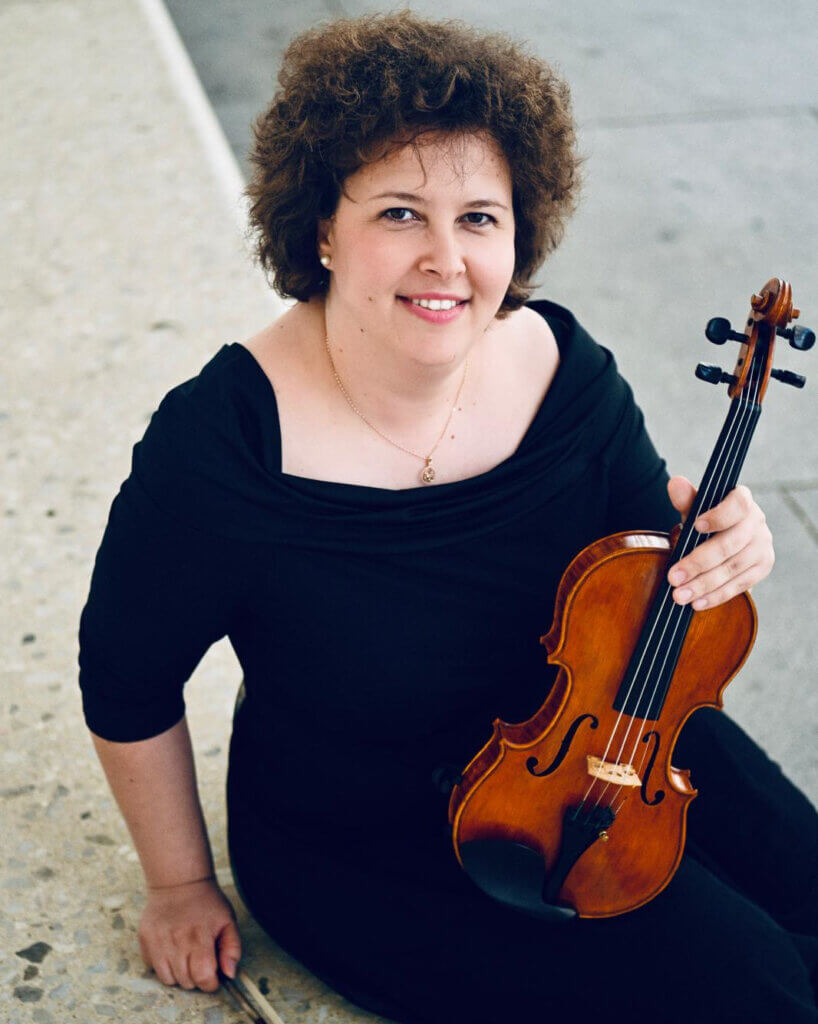
Marion Michael, Airi Tedo, Thomas Röpke, Winfried Michael
Marion Michael, owner
Born in 1973, Marion Michael began her violin‐making apprenticeship in 1995 in Munich and Mittenwald, successfully completing it with her certification as a violin maker. She then spent several years working in her father’s workshop, where she perfected her skills and became attuned to the nuances of the craft.
In 2007, Marion passed her master’s examination in Mittenwald. From then until 2012, she and her father managed the shop and workshop together, after which she took full ownership of the business. Since becoming an independent luthier, Marion’s workshop has welcomed violin makers from France, Italy, Japan, Taiwan, and beyond.
Thomas Röpke
Thomas Röpke, who has been part of the workshop since 2015, is specifically responsible for the bows of the string instruments In particular, he carries out rehairing and all other repairs to customer bows. Daneben ist Thomas Röpke auch mit der Restaurierung beschäftigt.
Zoia Sorel
Musical Consulting – Violin, Viola & Bow
Zoia is a professional violinist with several Master’s degrees in artistic performance and music education, as well as many years of experience in concerts, orchestras and teaching.
When choosing a violin, viola or bow, she advises both beginners looking for their first instrument and advanced or professional musicians. She plays selected instruments and bows, helps compare sound, response, projection and playing feel, and supports clients in finding an instrument that suits their individual musical needs.
Consultations are available by appointment in German, English, Ukrainian and Russian.
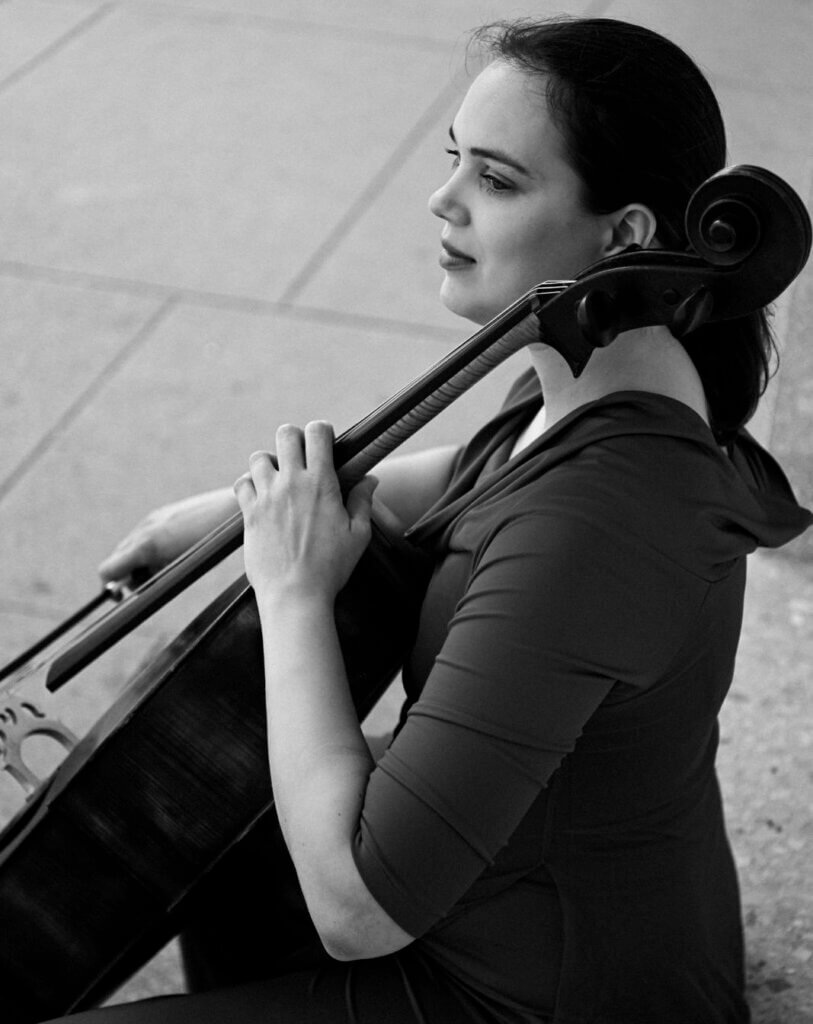
Terézia Vargová
Musical Consulting – Cello & Bow
Terézia is a professionally trained cellist with a Master’s degree and many years of concert and teaching experience. When choosing a cello or bow, she supports our clients from the perspective of a professional musician. She plays selected instruments and bows, compares their sound, response, projection and playing feel, and helps clients perceive the differences from the listener’s perspective as well.
In this way, her musical consulting complements the professional expertise of our violin maker and allows for a comprehensive assessment when searching for the right instrument or bow.
Consultations are available by appointment in German, English, Slovak and Czech (all of them fluent), Swedish (A2) and Russian (A1).
History
Violin making in the second generation
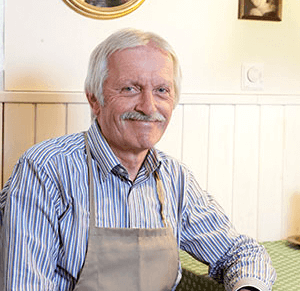
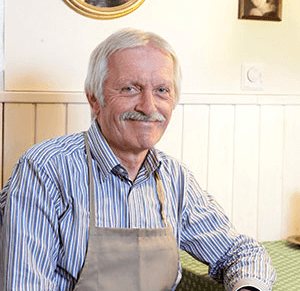
It has been handed down that ancestors of the Michael family were already making components for stringed instruments in the 19th century. The founder of today’s Geigenbau Michael company was Marion’s father, Winfried Michael, born in 1942. He attended the state technical school for violin making in Mittenwald from 1958 and won several Bavarian state prizes in violin making competitions. After completing his training in Kiel and Freiburg i. Br., he passed his master craftsman’s examination in Karlsruhe in 1967.
in 1968 he opened his own violin making workshop in Munich. He spent a long time looking for suitable premises, which he finally found in the basement of Hildegardstraße 6 near the Isartor: The vaults of the listed building are ideal for storing stringed instruments and tonewoods due to the better humidity, especially in the winter months. He shaped and managed his workshop for more than forty years. Since 2012, his daughter Marion has been running the workshop and store as a master violin maker.
History
Violin making in the second generation
It has been handed down that ancestors of the Michael family were already making components for stringed instruments in the 19th century.
The founder of today’s Geigenbau Michael company was Marion’s father, Winfried Michael, born in 1942. He attended the state technical school for violin making in Mittenwald from 1958 and won several Bavarian state prizes in violin making competitions. After completing his training in Kiel and Freiburg i. Br., he passed his master craftsman’s examination in Karlsruhe in 1967.
n 1968 he opened his own violin making workshop in Munich. He spent a long time looking for suitable premises, which he finally found in the basement of Hildegardstraße 6 near the Isartor: The vaults of the listed building are ideal for storing stringed instruments and tonewoods due to the better humidity, especially in the winter months. He shaped and managed his workshop for more than forty years. Since 2012, his daughter Marion has been running the workshop and store as a master violin maker.
History
Violin making in the second generation
It has been handed down that ancestors of the Michael family were already making components for stringed instruments in the 19th century.
The founder of today’s Geigenbau Michael company was Marion’s father, Winfried Michael, born in 1942. He attended the state technical school for violin making in Mittenwald from 1958 and won several Bavarian state prizes in violin making competitions. After completing his training in Kiel and Freiburg i. Br., he passed his master craftsman’s examination in Karlsruhe in 1967.
n 1968 he opened his own violin making workshop in Munich. He spent a long time looking for suitable premises, which he finally found in the basement of Hildegardstraße 6 near the Isartor: The vaults of the listed building are ideal for storing stringed instruments and tonewoods due to the better humidity, especially in the winter months. He shaped and managed his workshop for more than forty years. Since 2012, his daughter Marion has been running the workshop and store as a master violin maker.
Articles & Reportages
here for reading
Violin Making with Marion Michael – The Reportage
A report about our master workshop – published on 10.04.2014 in the Evening Newspaper.